A Professional's Take on the New Huntsman Tournament Edition
Introduction
The Huntsman Tournament Edition landed with a clear brief: bring high-performance keyboard features into a compact, competition-friendly package. Positioned for players who participate in esports, LAN events, and frequent travel between setups, this keyboard aims to balance durability, speed, and portability without excess frills. This article examines the Huntsman Tournament Edition from a professional perspective—evaluating its design, switch technology, real-world performance, customization options, and long-term value. The goal is to give buyers the information they typically care about when choosing a tournament-grade keyboard.
Design and Build Quality
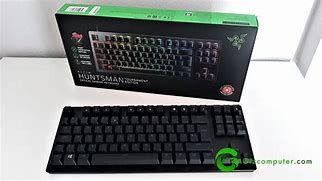
At a glance, the Huntsman Tournament Edition follows the established tournament keyboard formula: tenkeyless layout (TKL) to maximize mouse movement area, a minimal bezel, and a detachable cable for easy packing. The chassis typically uses a rigid top plate—often metal or reinforced polymer—to give a solid, stable feel during fast-paced typing or rapid keypress sequences. The absence of a number pad keeps the footprint small while preserving standard key spacing, which is important for players who switch between machines and expect consistent muscle memory.
For travel and LAN use, the detachable cable is a practical inclusion. It reduces the chance of cable damage and makes the keyboard easier to store. The keyboard's weight is balanced to feel substantial enough to stay put during play yet light enough to carry. In professional environments—where keyboards are packed into backpacks or transported between venues—these physical considerations noticeably impact daily convenience.
Switches and Key Feel
A headline feature for the Huntsman Tournament Edition is its use of optical actuation switches. Instead of a physical contact closing a circuit, these switches register keystrokes using a light-based sensor. The main benefits cited for optical actuation are lower latency, more consistent actuation points across the set, and longer theoretical lifespans due to less mechanical wear on contact surfaces.
How that translates to feel depends on the specific switch variant (linear versus clicky). Many players who prioritize rapid actuation and smooth keypresses prefer linear optical switches because they remove tactile interruptions that some perceive as slowing double-taps or quick repeats. Conversely, users who rely on audible or tactile feedback for precise timing may find clicky options preferable. Tournament players often choose linear switches for the predictable, smooth bottoming and return that favor high action-per-minute scenarios.
Keycap material and profile also matter. Buyers commonly look for durable keycaps that resist shine and remain readable after heavy use. While some users prefer textured or PBT keycaps for long-term resistance to oils and wear, the factory configuration on tournament-oriented keyboards often balances durability and cost. The important consideration is whether replacement keycaps or aftermarket options are easily available for the model—this is valuable for teams or individuals who want to maintain consistency across multiple keyboards.
Performance in Competitive Play
In tournament settings, performance is judged by reliability, consistency, and a feeling of immediacy between intent and on-screen action. The Huntsman Tournament Edition aims to minimize the delay between press and registration, which can be advantageous in games that depend on split-second inputs. Optical switches, combined with accurate debounce handling in firmware, tend to reduce variability between presses—an appealing point for competitive players.
Another important factor is rollover and anti-ghosting. For modern esports titles players may press multiple keys simultaneously during combos or movement micro-adjustments; full n-key rollover over a USB connection ensures every input is registered independently. In practice, the Huntsman Tournament Edition meets the expectations of high-end competition keyboards in this area, enabling complex input sequences without missed keypresses.
Latency is often discussed in milliseconds. For the average player, perceptible difference may be small, but professionals and high-level competitors emphasize any edge that reduces the chain of input delay. The combination of optical actuation and optimized firmware in tournament keyboards narrows that chain. The result is a keyboard that feels “fast” in hand—a subjective but real sensation among pros.
Discover deals on Electronics — updated daily.
See Deals →Software and Customization
Customization options differ between users: some prefer plug-and-play simplicity, while others want deep remapping, macros, and RGB configuration. The Huntsman Tournament Edition typically supports profile storage and remapping through manufacturer software. Onboard memory for saving profiles is useful for players who move between systems without wanting to reconfigure software each time. It is important to check whether saved profiles include lighting, macros, and key assignments—and how many profiles can be stored onboard.
Macro support and key remapping are useful for streamlining workflows outside gaming as well: content creators, streamers, and productivity-oriented users often repurpose keys for editing shortcuts or scene switching. However, in competitive tournaments, some events prohibit macros or remappable keys—buyers should verify tournament rules if this is a deciding factor.
Lighting is often treated as an aesthetic preference rather than a performance feature. While RGB should not be the primary purchase driver for a tournament keyboard, programmable lighting can provide useful visual cues (for example, profile indicators or game-integrated feedback). The key is whether the software interface is stable and responsive, and whether it supports cross-device ecosystems if users already own peripherals from the same manufacturer.
Durability and Maintenance
Tournament keyboards undergo heavy, high-intensity use. Durability considerations include the lifespan of switches, keycap wear, and the resilience of the chassis to knocks and spills. Optical switches usually claim higher actuation lifespans due to reduced mechanical contact, and the build materials in a tournament model are selected to withstand repeated transport and use.
Maintenance in a pro environment often involves cleaning and occasional keycap replacement. Buyers should confirm the ease of removing keycaps and whether the stabilizers (for larger keys) are pre-lubed or require maintenance. For teams and organizations, the ability to easily service a keyboard—replace caps, reattach cables, or update firmware—reduces downtime and long-term costs.
Real-World Use Cases
Several practical scenarios highlight why a tournament edition keyboard like this is appealing:
- Esports athletes who travel for events and require a consistent key feel across different venues.
- LAN-party regulars who need a compact, robust keyboard that fits into shared setups and backpacks without a tangle of cables.
- Streamers or content creators who use the TKL layout to maximize desk space for wide mouse movements or multi-monitor setups.
- Competitive testers and coaches who appreciate detachable cables and straightforward firmware updates for fleet maintenance.
- Users who value quick actuation for fast typing as well as gaming—optical switches can provide a unique balance for both.
Pros & Cons
- Pros
- Compact tenkeyless form factor that supports ergonomic mouse movement and portability
- Optical actuation switches that offer low-latency registration and long theoretical lifespans
- Detachable cable design for easy transport and reduced wear during travel
- Sturdy chassis intended for consistent performance under competition conditions
- Onboard profile and software customization useful for cross-system use
- Cons
- Fewer convenience features compared with full-size premium models (no dedicated media wheel or integrated wrist rest)
- Switch preference is subjective—linear optical switches may not suit users who want tactile feedback
- Some users report higher replacement-keycap costs if the factory keycaps are not PBT
- Dependence on manufacturer software for deep customization can complicate setups on locked-down or non-Windows systems
Comparison: Huntsman Tournament Edition at a Glance
| Feature | Huntsman Tournament Edition | Full-size Tournament/Pro Model | Other TKL Competitor |
|---|---|---|---|
| Form Factor | Tenkeyless (TKL) — compact for travel | Full-size options available — more keys and media controls | TKL — similar footprint (e.g., other esports-focused brands) |
| Switch Type | Optical actuation (linear or clicky variants available) | Varies — mechanical or optical options, sometimes with additional switch types | Mechanical (Cherry MX/GX/Kailh) — tactile and linear options common |
| Keycap Material | Factory keycaps designed for gaming; replacement options available | Often higher-end keycaps on flagship models | Varies; many competitors offer PBT or upgrade-friendly layouts |
| Connectivity | Wired with detachable cable | Wired or wireless (on some models) | Wired; some newer models offer wireless |
| Onboard Memory & Software | Supports onboard profiles; customization via manufacturer software | Often extensive software and onboard storage | Varies; many support onboard macro storage |
| Portability | High — designed for LAN/tournament use | Lower — larger and heavier | High — also designed for esports portability |
Buying Guide: What to Look For
When evaluating a tournament-grade keyboard such as the Huntsman Tournament Edition, professionals consider a mix of technical specs, physical design, and real-world logistics. The following checklist helps prioritize features based on common buyer priorities:
1. Switch Preference and Typing Style
Decide whether linear, tactile, or clicky switches suit the user’s playstyle. Linear switches favor smooth rapid presses; tactile switches give physical feedback for precise timing; clicky switches provide audible cues. If possible, test switch types in person or via switch testers before committing.
2. Layout and Ergonomics
Tenkeyless layouts are popular among competitive players because they free up desk space for wider mouse movement. Consider whether the absence of a numeric keypad affects productivity. For long sessions, evaluate the need for an ergonomic wrist rest—many tournament keyboards omit this to reduce size, so a separate rest may be required.
Find top-rated Electronics products at great prices.
View Offers →3. Build Quality and Portability
Look for a durable top plate and stable feet. Detachable cables and compact footprints are essential for travel. Confirm how easily the keyboard can be packed and whether a carry case or sleeve is available if frequent travel is expected.
4. Customization and Onboard Memory
Check whether lighting, macros, and key remaps can be saved to onboard memory. This is particularly useful for users switching between machines or competing where installing software is not feasible. Also, validate the software ecosystem—reliable, well-updated software enhances long-term usability.
5. Keycap Material and Replaceability
Verify the keycap profile and material. PBT keycaps resist shine from oils and last longer, while ABS keycaps can be smoother and sometimes more cost-effective. Ensure keycap pullers are available and that replacement keycap sets are compatible.
6. Serviceability and Warranty
For pro use, the ease of servicing a keyboard matters. Confirm warranty coverage for switches and electronics, and check how quickly manufacturer or retailer service operates. Teams often prefer suppliers with responsive support and easily obtainable replacement parts.
7. Tournament and LAN Considerations
Before purchasing for competitive play, confirm that the keyboard meets tournament rules—some events restrict programmable macros or profiles. The physical cable length, reliability of firmware, and ability to function without manufacturer software are all practical considerations when preparing for an event.
Conclusion
For players who prioritize portability, consistent performance, and low-latency actuation, the Huntsman Tournament Edition represents a focused solution. It delivers the core elements that matter in competitive settings: a compact footprint, quick actuation through optical switches, and a robust physical design that withstands travel and heavy use. The trade-offs—fewer comfort additions like integrated media controls or wrist rests—are intentional, aimed at making a keyboard that excels in tournament environments rather than at a permanent desk installation.
Ultimately, whether the Huntsman Tournament Edition is the right keyboard depends on individual priorities: those who value small footprint, rapid actuation, and dependable performance will find it aligns well with professional needs. Buyers should inspect switch type options, verify software and onboard memory compatibility with their workflow, and consider maintenance and keycap replaceability for long-term ownership. With those factors in mind, the Huntsman Tournament Edition is a compelling choice for competitive players and frequent travelers who demand a keyboard designed for performance first.