Should You Buy the Home Speaker 300 in 2026? A Deep Dive
Introduction
I’ve been using the Home Speaker 300 for several months now, and going into 2026, I think it sits in a very interesting position. It is no longer the newest smart speaker on the market, and that matters. Newer competitors promise better assistants, smarter room correction, more modern app ecosystems, and broader streaming support. But after living with this speaker day after day in my kitchen, office, and occasionally my bedroom, I’ve found that age alone does not make it irrelevant. In some ways, the Home Speaker 300 still feels thoughtfully designed and genuinely enjoyable to use. In other ways, it feels exactly like a product from a previous smart speaker era.
What I found was that this speaker is at its best when I stop thinking of it as a futuristic voice hub and start judging it as what it really is: a compact premium wireless speaker with smart features. If I frame it that way, a lot of its strengths become obvious. It sounds fuller than many small speakers I’ve tried, it looks refined enough to leave out in the open, and it handles casual daily listening very well. But I also noticed a few frustrations that became more apparent the longer I owned it, especially around app behavior, ecosystem lock-in, and the fact that some modern convenience features are better executed elsewhere.
So, should you buy the Home Speaker 300 in 2026? In my experience, that depends less on whether it is “good” and more on what kind of buyer you are. If sound quality and elegant design matter more to you than having the latest smart platform tricks, it still has a place. If you want the smoothest modern smart home and streaming experience possible, I think you should go in with open eyes.
My Long-Term Experience With the Home Speaker 300
After testing the Home Speaker 300 for everyday music listening, podcasts, radio streams, and general household use, I came away with mixed but mostly positive feelings. The first thing I appreciated was how substantial it sounds for its size. A lot of compact smart speakers sound clean but thin. This one, in my experience, pushes more body into vocals and has a warmer, room-filling character that makes background music feel richer. I noticed that acoustic tracks, jazz, softer pop, and spoken-word content all benefited from that fuller tuning.
I was surprised by how often I reached for it over some technically newer speakers I had nearby. Not because it was more feature-packed, but because it made everyday listening feel easy and pleasant. In a medium-sized room, it produced enough scale that I didn’t immediately feel the need for a stereo pair or a bigger speaker. It is not going to replace a proper hi-fi setup, of course, but for casual listening it held my attention better than I expected.
That said, one thing that bothered me was that the user experience around the speaker never felt quite as polished as the sound. Physical controls are straightforward, and I like having tactile buttons rather than relying fully on voice commands or touch gestures. But the software side felt uneven at times. I noticed occasional lag in app response, and setup, while not difficult, did not feel as frictionless as the best smart audio products in 2026. Once everything was running, it was fine. Getting there felt slightly dated.
I also found that the Home Speaker 300 works best for people who already know what they want from a speaker. If I expected a perfect all-in-one smart home command center, I ended up focusing on its limitations. If I used it primarily as a premium compact wireless speaker that happened to support voice features and multi-room use, I enjoyed it much more.
Design, Build, and Everyday Usability
The design is one of the reasons I think this speaker has aged fairly well. I’ve had speakers that sounded good but looked cheap, flashy, or awkward in a living space. The Home Speaker 300 does not have that problem. Its shape is distinctive without being strange, and it feels like a product meant to live on a shelf or countertop without demanding attention. I liked that I could move it between rooms and it never looked out of place.
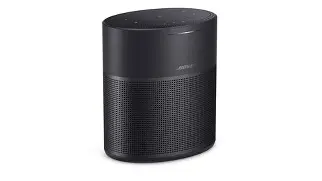
Build quality also left a good impression on me. It feels dense and deliberate rather than hollow. After months of use, it still looked and felt premium. Buttons remained clicky, the finish held up well, and nothing about it gave me the sense that corners had been cut. In my experience, that kind of physical longevity matters more in 2026 because buyers are keeping audio gear longer and expecting more value over time.
On the usability side, I appreciated the simple top controls. Volume changes, play/pause, and preset access were all easy enough to do without opening an app. I found those presets especially handy for quickly jumping into playlists or internet radio. It made the speaker feel more practical in real daily use, especially in the kitchen when my hands were busy and I did not want to fuss with my phone.
Still, I noticed that the overall interface philosophy feels more traditional than modern. That is not necessarily bad, but buyers expecting a super fluid, deeply adaptive smart experience may see it as old-fashioned. I personally came to like that straightforwardness, but it will not suit everyone.
Shop the latest Audio & Headphones picks on Amazon.
View Offers →Sound Quality: Where the Home Speaker 300 Still Makes a Case for Itself
If there is one area where I think the Home Speaker 300 still earns attention in 2026, it is sound quality. I’ve been using this for everything from low-volume morning playlists to louder evening sessions, and what stood out to me most was its ability to sound substantial without becoming harsh. It has a smooth presentation that is easy to live with.
Bass, in my experience, is generous for the size. It is not the deepest or tightest bass I have heard from a premium compact speaker, but it gives music enough weight to feel satisfying. I noticed this especially with electronic music and modern pop. Kick drums had presence, and bass lines came through with enough energy to make the speaker feel bigger than it is. At the same time, that warmth can occasionally blur detail. On busier tracks, I found the low end a little rounded rather than sharply controlled.
The midrange is where I think this speaker does some of its best work. Vocals sounded pleasantly full, podcasts were easy to understand, and instruments like piano and guitar had a natural body that made long listening sessions comfortable. I never found it fatiguing. In fact, one of the reasons I kept using it was that it rarely sounded aggressively tuned.
Treble is decent but not especially airy. I noticed that cymbals and upper harmonics were present without becoming piercing, but they did not always deliver the sparkle or openness I hear from some competing speakers. If you like a crisp, analytical presentation, you may find the Home Speaker 300 a little soft on top. I personally did not mind that for casual room listening, but it is something I noticed repeatedly.
Sound dispersion is another strong point. I found that it filled a room better than some forward-firing compact speakers. It was forgiving about placement, though not infinitely so. Putting it too close to walls could thicken the bass more than I liked. Once I gave it a bit of breathing room, it sounded more balanced.
Smart Features and Connectivity in 2026
This is where the buying decision becomes more complicated. The Home Speaker 300 is not unusable by any means, but I think its smart and connectivity story feels more conditional in 2026 than its sound quality does. Depending on your preferred ecosystem, this could either be acceptable or mildly frustrating.
I noticed that wireless streaming worked reliably enough once configured, and for basic use that covered most of what I needed. Music playback from mainstream services was generally stable. Voice control, when available and properly configured, was useful for simple requests. But I also found that the overall experience depended heavily on app support and how comfortable I was working within the speaker’s ecosystem rather than expecting universal flexibility.
One thing that bothered me over time was that I occasionally felt like I had to work around the system rather than simply use it. That did not happen every day, but it happened enough that I noticed. In 2026, convenience has become a major part of what people pay for in wireless audio, and this speaker no longer feels best-in-class on that front.
Bluetooth remained valuable as a fallback. I used it more often than I expected because it gave me a simple, direct option when I didn’t feel like dealing with app-specific behavior. In my experience, a speaker that still works well over Bluetooth ages better than one that depends entirely on a perfect cloud ecosystem, and that helped the Home Speaker 300 remain useful.
Pros and Cons
Pros
- Rich, room-filling sound for a compact speaker that still feels satisfying in 2026
- Warm, pleasant tuning that works especially well for vocals, podcasts, jazz, and casual everyday listening
- Premium design and solid build quality that have aged well
- Useful physical controls and presets that make daily use easier
- Bluetooth fallback helps keep it practical even if app or ecosystem preferences change
- Good all-around speaker for kitchens, bedrooms, and offices where you want better sound than typical entry-level smart speakers
Cons
- Smart features feel less modern than some 2026 competitors
- App experience can feel inconsistent and occasionally a little dated
- Treble lacks some openness and sparkle compared with more refined rivals
- Bass can get a bit thick depending on placement and track selection
- Value depends heavily on price; at the wrong price, newer options make more sense
- Not the best choice for buyers seeking a cutting-edge smart home speaker
Who Should Consider It in 2026?
After living with it for months, I think the Home Speaker 300 makes the most sense for a specific kind of buyer. If you care first about pleasant sound, second about appearance, and only third about smart features, I think it still deserves consideration. I would especially recommend it to someone who wants one speaker for a shared living space and values a fuller, more mature sound over novelty.
I also think it is a good fit for buyers who are comfortable using Bluetooth or standard wireless streaming most of the time and do not need every assistant feature to feel cutting-edge. In my experience, people who get the most out of this speaker are the ones who see the smart features as a bonus rather than the core reason to buy it.
Find top-rated Audio & Headphones products at great prices.
See Deals →On the other hand, I would be cautious if you want tight integration with a modern smart home setup, the broadest possible service support, or the cleanest app-based control system. I noticed that once I started comparing it not just to speakers from its own era but to what is available now, its convenience gap became clearer.
Comparison Table: Home Speaker 300 vs What Buyers Usually Want in 2026
| Category | Home Speaker 300 | What Many Buyers Expect in 2026 |
|---|---|---|
| Sound Quality | Warm, full, room-filling, forgiving | Balanced or customizable tuning with strong clarity |
| Design | Premium, compact, stylish | Premium design with smaller footprints or portable flexibility |
| Smart Features | Useful, but no longer class-leading | Smoother assistants and tighter smart home integration |
| App Experience | Functional, sometimes dated | Fast, polished, highly reliable control apps |
| Connectivity | Strong basic wireless use with Bluetooth fallback | Broad ecosystem flexibility and seamless handoff |
| Best For | Listeners who prioritize sound and style | Buyers who want convenience, ecosystem depth, and longevity |
Buying Guide: What to Check Before You Buy
1. Be Honest About Why You Want It
The biggest lesson from my time with the Home Speaker 300 is that expectations shape satisfaction. If I bought it mainly for audio quality in a compact form, I was happy. If I judged it as a next-generation smart platform, I was less impressed. Before buying, I would ask yourself whether your priority is sound, smart features, or ecosystem compatibility. This speaker still does one of those better than the other two.
2. Pay Attention to Price
In 2026, price matters more than ever with an older speaker like this. I would not treat the Home Speaker 300 as an automatic buy at any price. What I found was that its value improves dramatically if it is discounted compared with newer premium wireless speakers. At a competitive price, its sound and build make a strong case. At a premium price, I think many buyers will start expecting newer software, newer features, and a more future-proof platform.
3. Think About Placement
I noticed that room placement had a real effect on performance. In a smaller room or on a counter near a wall, the bass could become thicker than I wanted. On a shelf with a bit of space around it, the sound opened up more naturally. If your room tends to exaggerate bass, this is worth keeping in mind. It is a forgiving speaker, but not immune to placement issues.
4. Consider Your Main Listening Habits
If you mostly listen to playlists, radio, podcasts, and background music, I think you’ll probably appreciate the Home Speaker 300’s tuning. It is easygoing and pleasant for long stretches. If you sit down for focused listening and care about fine detail, imaging precision, or maximum treble extension, you may want something more refined. I enjoyed it most when I let it do what it does naturally rather than asking it to perform like a dedicated stereo system.
5. Evaluate Ecosystem Friction Tolerance
This may sound oddly specific, but I think it matters. Some buyers are very sensitive to app quirks, setup oddities, and occasional control inconsistencies. Others just want the speaker to play music and are happy to use Bluetooth if needed. I noticed that my own tolerance varied depending on the day. If a slightly imperfect software experience frustrates you quickly, that should factor into your decision.
My Final Verdict After Months of Use
After testing for several months, I think the Home Speaker 300 is still a good speaker in 2026, but it is no longer an easy recommendation for everyone. In my experience, its strongest selling points are clear: attractive design, solid build quality, and a warm, satisfying sound that often feels larger than the speaker itself. I genuinely enjoyed listening to it, and there were many days when I preferred its easygoing presentation over brighter, more clinical alternatives.
At the same time, I can’t ignore the parts that feel dated. I noticed that the smart experience lacked the smoothness I now expect from the best wireless speakers, and the app ecosystem did not always feel modern or effortless. One thing that bothered me was not any single major flaw, but the accumulation of small reminders that this is an older product living in a faster-moving category.
If you can get the Home Speaker 300 at the right price, and if your main goal is to enjoy good sound from a stylish compact speaker, I think it remains worth considering. If you want the most future-proof smart speaker experience in 2026, I would probably look elsewhere. For me, after months of daily use, the honest answer is this: I liked it more as a speaker than as a smart platform, and that is exactly why it still has a place for the right buyer.